In 2025
Foreign resident population in the Autonomous Region of Madeira exceeded 19 thousand persons
According to the Resident Population Estimates released by the Regional Directorate of Statistics of Madeira (DREM), on 31 December 2025, 19 371 persons of foreign nationality resided in the Autonomous Region of Madeira (ARM), the highest figure in the series available for the period 2021-2025, corresponding to 7.3% of the population resident in the Region (266 130 people).
At the national level, in 2025 the ARM was the second NUTS 2 Region with the lowest representation of foreigners in the total resident population, surpassed only by the Autonomous Region of the Azores, where the foreign resident population represented 3.8% of the resident population. Conversely, Algarve and Grande Lisboa recorded the highest figures, with 27.9% and 22.6%, respectively.
In 2025, the foreign resident population was made up of 11 070 men (57.1%) and 8 301 women (42.9%), showing a predominance of male foreign residents.
Between 2021 and 2025, the foreign resident population in the ARM increased by more than two and a half times, rising from 7 423 to 19 371 persons, an increase of 11 948 persons (+161.0%). Over this period, the share of the foreign population in the total resident population rose from 2.9% to 7.3%.
Compared with 2024, the number of foreign residents increased by 1 779 persons (+10.1%), while the resident population of Portuguese nationality fell slightly (-349 persons), from 247 108 persons in 2024 to 246 759 in 2025. This trend confirms the growing role of migratory movements in the growth of the resident population of the Autonomous Region of Madeira, helping to offset the negative natural balance and to strengthen the working-age population.
Funchal accounted for the largest number of foreign residents in the Region, with 10 193 persons in 2025, corresponding to 52.6% of the total foreign residents in the ARM in 2025. It was followed by Santa Cruz (2 291; 11.8%), Calheta (1 430; 7.4%), Machico (1 170; 6.0%) and Câmara de Lobos (1 090; 5.6%). The municipalities where the foreign resident population accounted for the largest share of total residents were Porto Santo (13.6%), Calheta (12.3%), Funchal (9.0%) and Ponta do Sol (7.8%).
Between 2021 and 2025, the largest absolute increases in the foreign resident population were recorded in Funchal (+6 300 persons), Santa Cruz (+1 236), Machico (+888), Câmara de Lobos (+763) and Porto Santo (+621). In relative terms, the municipalities of Santana and Machico stand out, where the foreign resident population more than quadrupled.
In 2025, the Venezuelan community was the most representative in the Autonomous Region of Madeira, totalling 3 004 residents, equivalent to 15.5% of the foreign resident population. It was followed by nationals of Brazil (1 963; 10.1%), Nepal (1 534; 7.9%), Germany (1 354; 7.0%) and the United Kingdom of Great Britain and Northern Ireland (1 192; 6.2%).
Venezuelan nationals were the main drivers of the increase in the foreign population in the Region between 2021 and 2025, contributing 19.7 percentage points (pp) (+1 460 persons) to the 161.0% increase referred to above. In the following positions are nationals of Nepal, Brazil, Germany and Ukraine, who contributed 18.9 pp, 13.1 pp, 10.8 pp and 9.9 pp, respectively, to that increase.
In 2025, the foreign resident population in the Region showed an increasingly diversified composition, encompassing nationalities from all continents. In addition to the traditionally most represented communities, such as Brazil, the United Kingdom and Germany, significant increases were observed, compared to 2021, in residents originating from Asian countries, namely Nepal, Bangladesh and India, as well as from various African countries, such as São Tomé and Príncipe, Mozambique, Guinea-Bissau and Cabo Verde.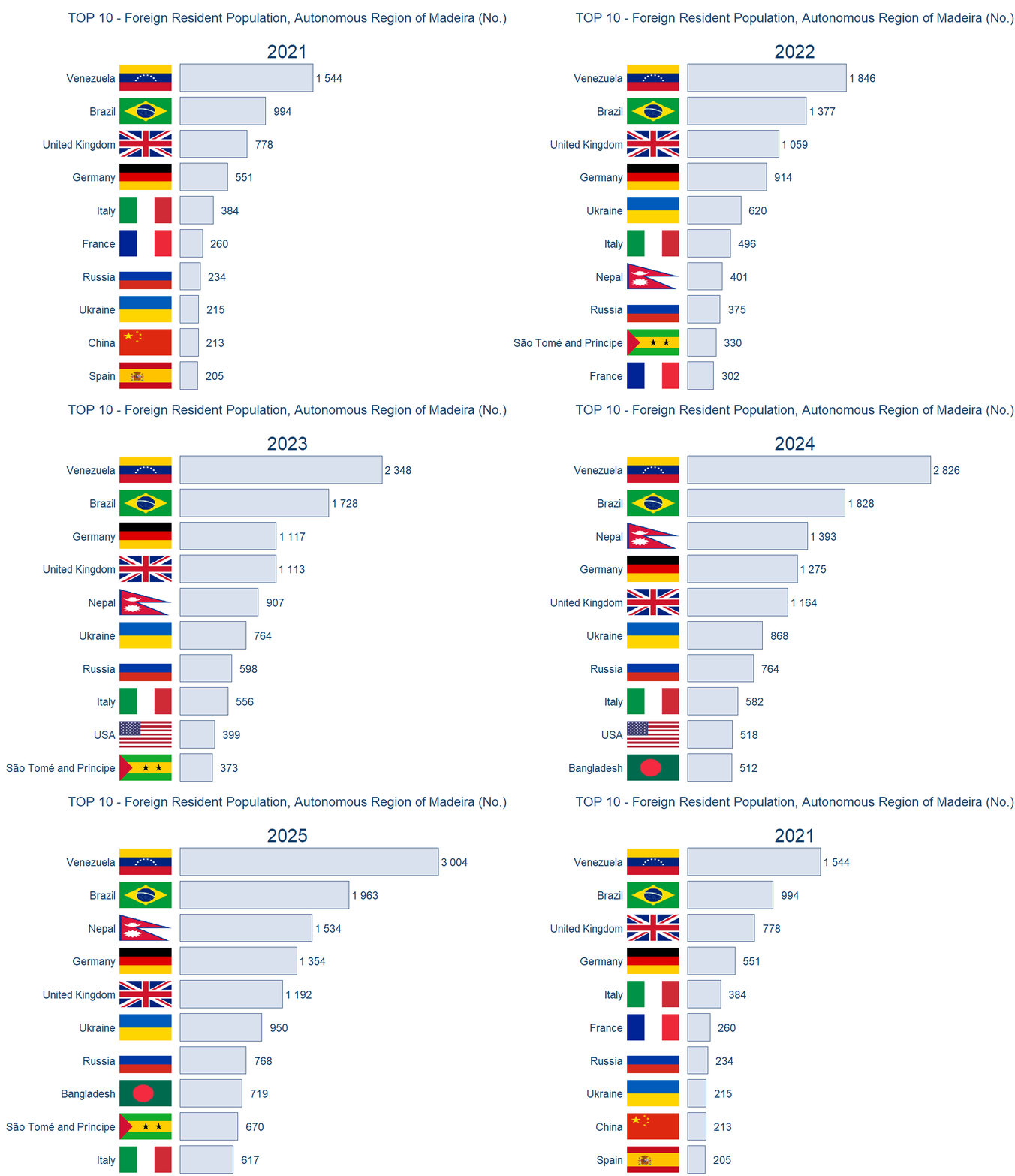
For more information, please click on: