

- HomeHome
- DREMDREM
-
Statistical InformationStatistical Information
-
Economic
- Government
- Agriculture, Forestry and Fishing
- Construction and housing
- Trade
- Economic Accounts
- Enterprises
- Industry and energy
- Innovation and knowledge
- Prices
- Monetary and Financial Sector
- Short-term trends
- Transports and Communications
- Tourism
-
Social
- Culture, Sport and Recreation
- Education
- Health
- Justice
- Labour market
- Population and Social Standards
- Social protection
- Territory
- Multithemes
- Indicators System
-
Economic
- Dissemination CalendarDissemination Calendar
- MetadataMetadata
- LinksLinks
- Site MapSite Map
- Press release
- Dashboards
- Contact usContact us
- RAMStats 2.0








Notícias (GB)
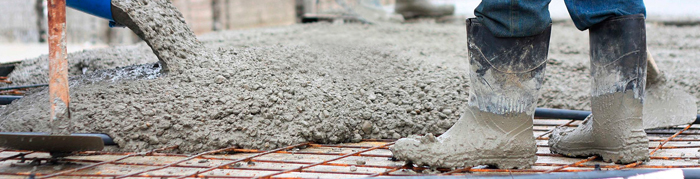
In the 3rd quarter of 2026, the volume of cement sold increased compared with the previous quarter, but decreased year-on-year (Read more...)
In September 2026, the twelve-month average rate of change of the Consumer Price Index (CPI) stood at 3.8%, with the year-on-year rate of change accelerating to 4.6% (Read more...)
In 2025, mental well-being and life satisfaction showed positive values in the Region (Read more...)
In the 2025/2026 school year, the number of students enrolled in non-higher education decreased at all levels/cycles of study, except for the 2nd cycle (Read more...)
DREM releases Demographic Statistics of the Autonomous Region of Madeira for 2025 (Read more...)
DREM publishes a new edition of the Quarterly Statistical Bulletin covering the 2nd quarter of 2026 (Read more...)
In 2025, the number of divorces increased compared to the previous year (Read more...)
In August 2026, the overnight stays in tourist accommodation in the Region increased by 3.3% year-on-year (Read more...)
In the 2nd quarter of 2026, the median rental value of new lease agreements increased by 17.4% year-on-year, while the number of new agreements increased by 8.8% (Read more...)
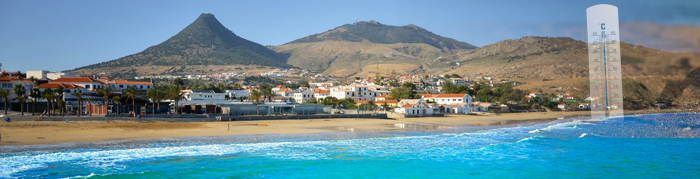
In August 2026, seven meteorological stations recorded tropical nights on every day of the month (Read more...)
Notícias (GB)
In the 3rd quarter of 2026, the volume of cement sold increased compared with the previous quarter, but decreased year-on-year (Read more...)
In September 2026, the twelve-month average rate of change of the Consumer Price Index (CPI) stood at 3.8%, with the year-on-year rate of change accelerating to 4.6% (Read more...)
In 2025, mental well-being and life satisfaction showed positive values in the Region (Read more...)
In the 2025/2026 school year, the number of students enrolled in non-higher education decreased at all levels/cycles of study, except for the 2nd cycle (Read more...)
DREM releases Demographic Statistics of the Autonomous Region of Madeira for 2025 (Read more...)
DREM publishes a new edition of the Quarterly Statistical Bulletin covering the 2nd quarter of 2026 (Read more...)
In 2025, the number of divorces increased compared to the previous year (Read more...)
In August 2026, the overnight stays in tourist accommodation in the Region increased by 3.3% year-on-year (Read more...)
In the 2nd quarter of 2026, the median rental value of new lease agreements increased by 17.4% year-on-year, while the number of new agreements increased by 8.8% (Read more...)
In August 2026, seven meteorological stations recorded tropical nights on every day of the month (Read more...)
Newsletters
Subscribe to our newsletter and get statistical data as soon as it is available!...
DREM updates Territory Statistics
The Regional Directorate of Statistics of Madeira (DREM) releases today on its website, a set of tables with updated information regarding territory, namely data concerning areas, perimeters, and altimetry of the revised and updated version of the Official Administrative Map of Portugal, 2021 version - CAOP2021 whose responsibility in the Autonomous Region of Madeira belongs to the Regional Directorate for Spatial Planning (DROTe).
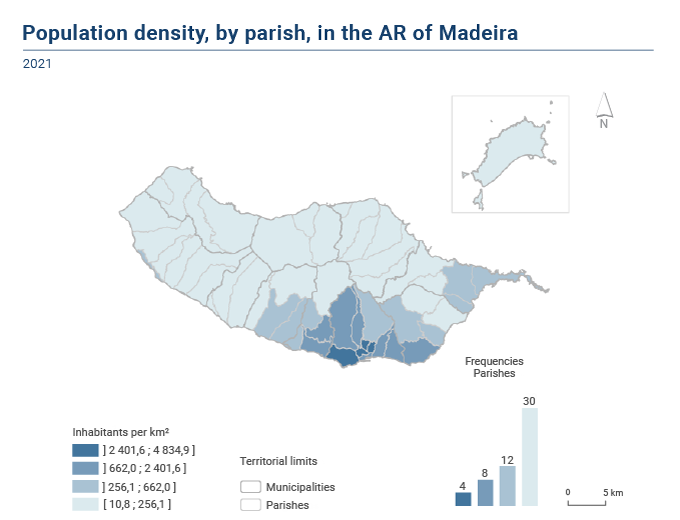
Information is also provided on the resident population at the civil parish level (final data from the 2021 Census), its population density, data on the territorial structure, extreme points, and major mountain systems.
In 2021, the population density in the Autonomous Region of Madeira stood at 313.0 inhabitants per km2
In 2021, the population density in the Autonomous Region of Madeira stood at 313.0 inhabitants per km2, with the highest value in Funchal (1,387.7 inhabitants/km2) and the lowest in Porto Moniz (30.4 inhabitants/km2). By parish, this indicator reaches its highest value in S. Pedro (4 834.9 inhabitants/km2) and its lowest value in Ribeira da Janela (10.8 inhabitants/km2).
Compared to the other six NUTS II regions in Portugal, the Autonomous Region of Madeira has the second highest population density, only behind Área Metropolitana de Lisboa (951.9 inhabitants/km2). Alentejo is the region with the lowest population density (22.3 inhabitants/km2), while the Autonomous Region of Azores has a population density of 101.8 inhabitants/km2.
International Statistical Cooperation
 |
International Statistical Cooperation
|
Statistical Literacy
 |
Statistical Literacy
|
|
|
|
|
 |
 |
|



 |
|
|
 |

Copyright © 2026 Direção Regional de Estatística da Madeira. All rights reserved.
Address: Calçada de Santa Clara 38, 9004-545 Funchal, Madeira Island
Phone: +351 291 145 110 (National landline call)