











Subscribe to our newsletter and get statistical data as soon as it is available!...
|
Resident Population Resident Population Estimates (31 December) adjusted to the final results of the 2021 Census (thousands). |
|
2021 - 2024, Provisional Resident Population Estimates - post-census estimates based on the 2021 Census results. Source: Statistics Portugal/DREM - Demographic Statistics |
|
Unemployment Rate Quarterly rate obtained from the Labour Force Survey, corresponding to the ratio of the unemployed population to the active population (%). |
|
Source: Statistics Portugal/DREM - Labour Force Survey |
|
Inflation Rate Average Rate of Change over the last 12 months of the Consumer Price Index (%). |
|
Source: Statistics Portugal/DREM - Consumer Price Index |
|
Overnight Stays Overnight stays recorded in total collective tourist accommodation (thousands). |
|
Source: Statistics Portugal/DREM - Tourism Statistics |
|
GDP Gross Domestic Product (GDP) of the Autonomous Region of Madeira at current prices, base 2021 (million euros). |
|
The value for 2024 is provisional. Source: Statistics Portugal - Regional Accounts (Base 2021) |
|
Family Dwelling Sales Number of Family Dwelling Sales (Total, New and Existing) in the Autonomous Region of Madeira. |
|
Source: Statistics Portugal (INE, IP.). |
|
Company Incorporation and Dissolution Number of companies incorporated and dissolved. |
|
Source: Directorate-General for Justice Policy |
|
Natural Balance Difference between the number of live births and the number of deaths in a given period of time (No.). |
|
* Preliminary data compiled up to 10th April 2026. Source: Statistics Portugal/DREM - Demographic Statistics |
|
Regional Indicator of Economic Activity 3-month moving average (%). |
|
Source: DREM |
|
Population Resident Population estimates by the 31st of December which incorporate the 2021 Census final results (thousands). |
|
2021 - 2024, Provisional Resident Population Estimates, post-census estimates based on the results of the 2021 Census. Source: INE/DREM - Demographic Statistics |
|
Unemployment Rate Quarterly rate derived from the Labour Fource Survey, which corresponds to the ratio between the unemployed and the active population(%). |
|
Source: INE/DREM - Labour Force Survey |
|
Inflation Rate 12-month average growth rate of the Consumer Price Index. |
|
Source: INE/DREM - Consumer Price Index |
|
Overnight stays Overnight stays in tourism accommodation (thousands). |
|
Source: INE/DREM - Tourism Statistics |
|
GDP Gross Domestic Product (GDP) of the Autonomous Region of Madeira at current prices, base 2021 (millions of euros). |
|
The value for 2024 is provisional. Source: INE - Regional Accounts (Base 2021) |
|
Dwelling Sales Number of Dwelling Sales (Total, New e Existing), in the Autonomous Region of Madeira. |
|
Source: Statistics Portugal |
|
Formation and Dissolution of Companies Number of formed and dissolved companies. |
|
Source: Directorate-General for Justice Policy |
|
Natural Change Balance between the number of live births and the number of deaths in a given time period (No.). |
|
* Preliminary data compiled up until April 10th, 2026. Source: INE/DREM - Demographic Statistics |
|
Regional Indicator of Economic Activity 3-month moving average (%). |
|
Source: DREM |
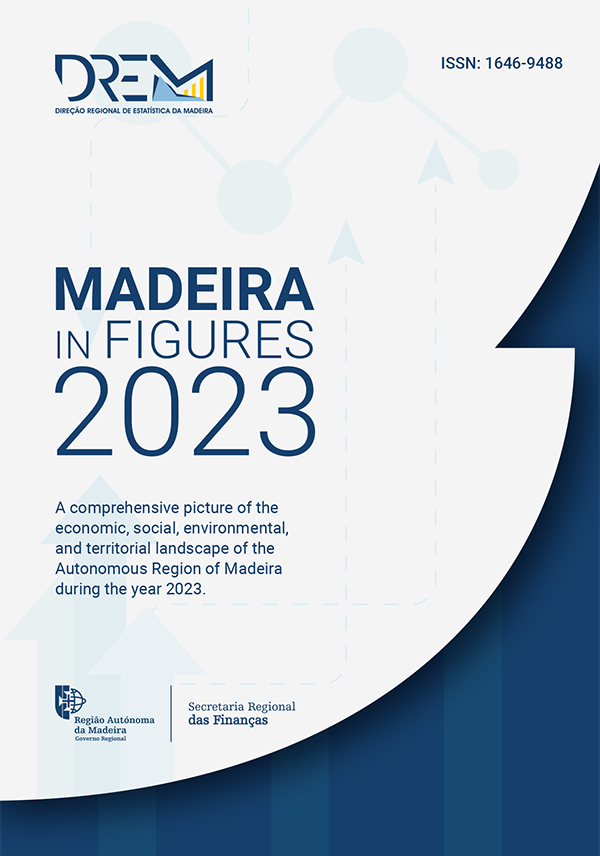
Annual publication
Price: papel - 3,50 € / PDF - Free
Year of publication: 2024
Reference period: 2023
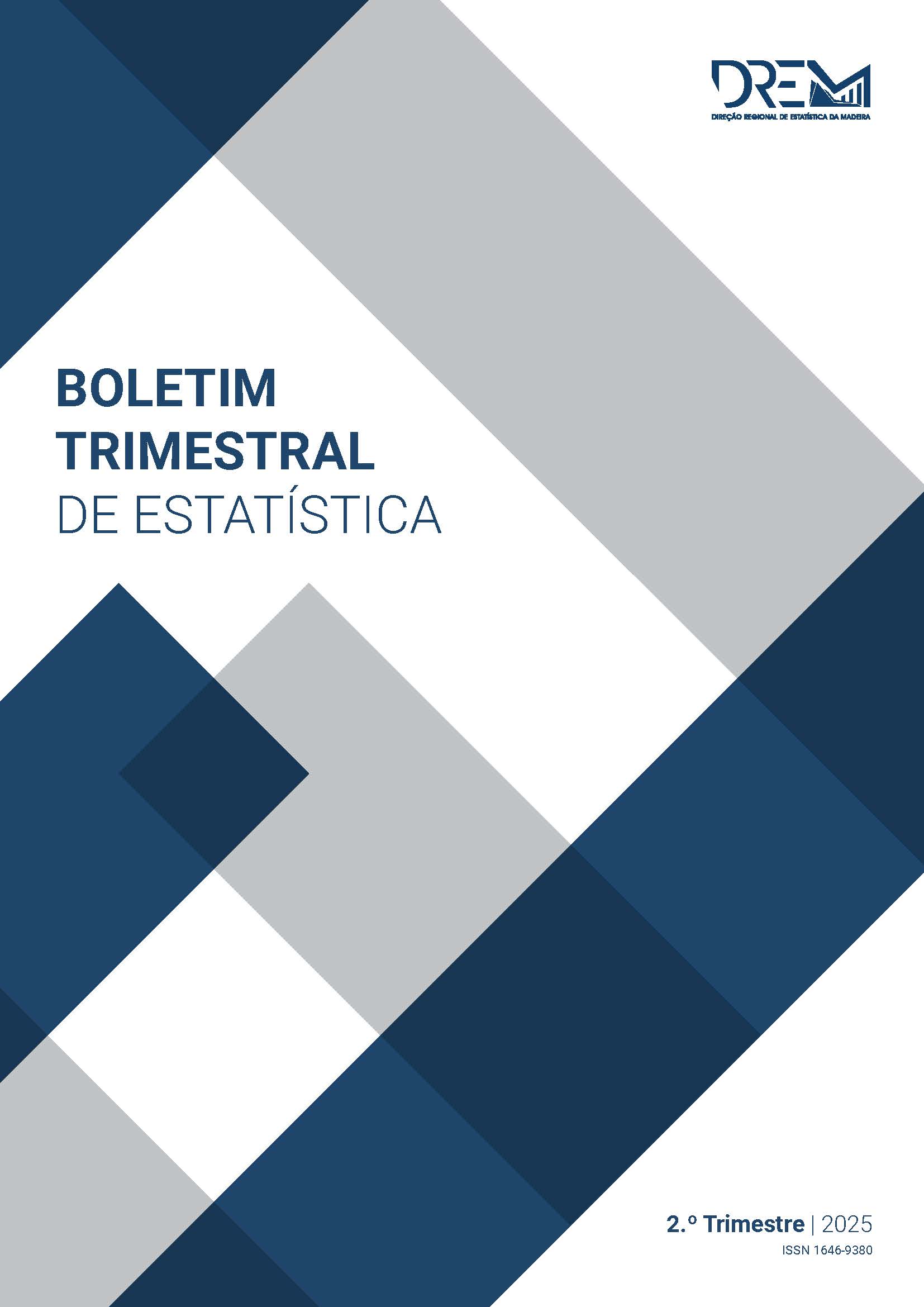
Quarterly Bulletin of Statistics
Quarterly publication
Price: paper - 4,00 € / PDF - Free
Year of publication: 2025
Reference period: 2nd Quarter 2025
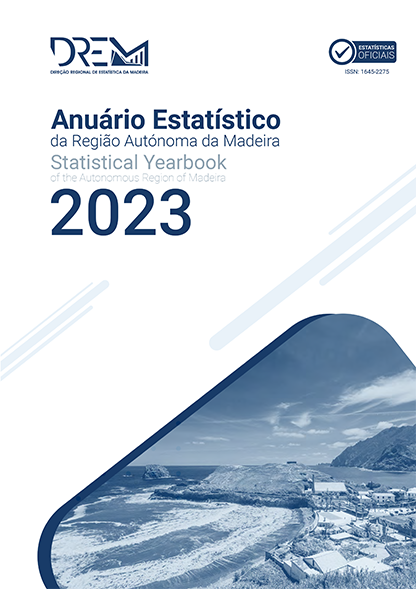
Annual publication
Price: paper - 22,00 € / PDF - Free
Year of publication: 2024
Reference period: 2023

Census - Final results: Autonomous Region of Madeira - 2021
Annual publication
Price: paper - 10,00 € / PDF - Free
Year of publication: 2023
Reference period: 2021

Annual publication
Price: PDF - Free
Year of publication: 2026
Reference period: 2025
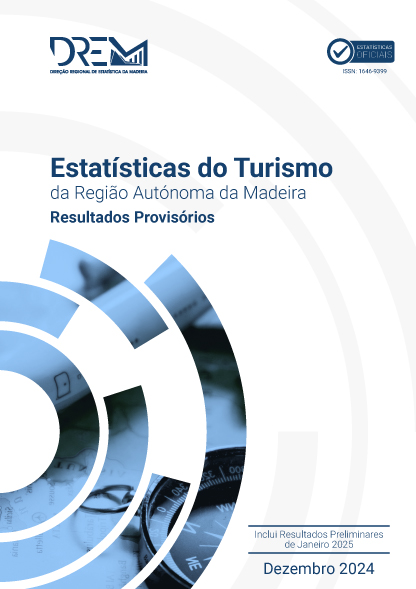
Monthly publication
Price: paper - 3,00 € / PDF - Free
Year of publication: 2025
Reference period: December 2024
Annual publication
Price: paper - 10,00 € / PDF - Free
Year of publication: 2024
Reference period: 2023

Annual publication
Price: paper- 12,00 € / PDF - Free
Year of publication: 2024
Reference period: 2022

International Trade Statistics
Annual publication
Price: paper- 6,00 € / PDF - Free
Year of publication: 2021
Reference period: 2020
Quarterly publication
Price: paper- 2,00 € / PDF - Free
Year of publication: 2025
Reference period: 4th Quarter 2024

Annual publication
Price: paper - 4,00 € / PDF - Free
Year of publication: 2024
Reference period: 2023

Agriculture and Fishery Statistics
Annual publication
Price: paper - 3,50 € / PDF - Free
Year of publication: 2024
Reference period: 2023

Annual publication
Price: paper - 12,00 € / PDF - Free
Year of publication: 2021
Reference period: 2019

Construction and Housing Statistics
Annual publication
Price: paper - 4,50 € / PDF - Free
Year of publication: 2024
Reference period: 2023
Annual publication
Price: paper - 3,50 € / PDF - Free
Year of publication: 2024
Reference period: 2023

Annual publication
Price: paper - 22,00 € / PDF - Free
Year of publication: 2023
Reference period: 2022

Monthly publication
Price: paper - 1,50 € / PDF - Free
Year of publication: 2025
Reference period: May 2025
Annual publication
Price: paper - 10,00 € / PDF - Free
Year of publication: 2024
Reference period: 2023
International Trade Statistics
Annual publication
Price: paper - 6,00 € / PDF - Free
Year of publication: 2021
Reference period: 2020
Annual publication
Price: paper - 4,00 € / PDF - Free
Year of publication: 2024
Reference period: 2023
Annual publication
Price: paper - 12,00 € / PDF - Free
Year of publication: 2021
Reference period: 2019
Quarterly Bulletin of Statistics
Quarterly publication
Price: paper - 4,00 € / PDF - Free
Year of publication: 2025
Reference period: 2nd Quarter 2025
Census - Final results. Autonomous Region of Madeira - 2021
Annual publication
Price: paper - 10,00 € / PDF - Free
Year of publication: 2023
Reference period: 2021
Construction and Housing Statistics
Annual publication
Price: paper - 4,50 € / PDF - Free
Year of publication: 2023
Reference period: 2022
Agriculture and Fishery Statistics
Annual publication
Price: paper - 3,50 € / PDF - Free
Year of publication: 2024
Reference period: 2023
Quarterly publication
Price: paper - 2,00 € / PDF - Free
Year of publication: 2025
Reference period: 4th Quarter 2024
Annual publication
Price: paper - 12,00 € / PDF - Free
Year of publication: 2024
Reference period: 2022
Monthly publication
Price: paper - 3,00 € / PDF - Free
Year of publication: 2025
Reference period: December 2024
DREM releases the results of the Study on Municipal Purchasing Power conducted by Statistics Portugal, for the year 2023
Statistics Portugal (INE) has released the results of the Study on Municipal Purchasing Power (EPCC), with data referring to the year 2023.
This study presents an analysis of Portuguese municipalities in terms of their purchasing power, within a broad concept of material well-being. It is based on a set of variables and employs a principal component factor analysis model to produce composite indicators that summarise purchasing power. The variables considered include data from the SIBS network, housing loans granted, taxation, population, monthly earnings of employees, enterprises, sales of new motor vehicles, and urban real estate transactions.
The study was first launched in 1993. The methodological document supporting this statistical operation states that “The methodology adopted in the EPCC is particularly suitable for spatial comparison of the different purchasing power indicators presented, but less so for temporal comparisons.” Accordingly, the analysis presented here refers to the year 2023, with results for previous years available on DREM’s website. Although caution is required when interpreting temporal comparisons of the indicators, it remains legitimate to compare the ranking positions of municipalities over time.
The EPCC comprises three indicators: the Per Capita Indicator (IPC) of purchasing power, the Percentage of Purchasing Power (PPC), and the Relative Dynamism Factor (FDR).
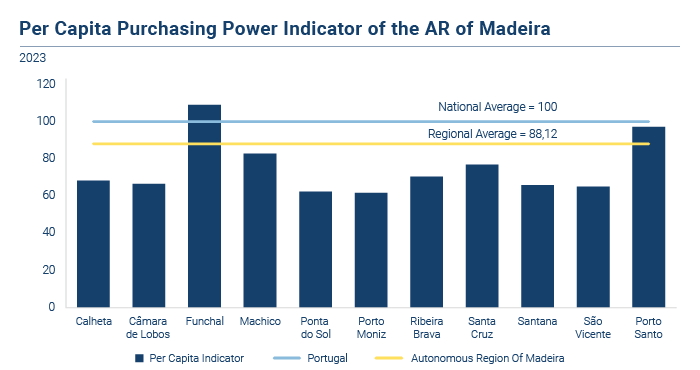
The Per Capita Indicator (IPC) refers to the purchasing power manifested daily, on a per capita basis, within each municipality or region, taking the national value as a reference. It should be noted that this indicator does not represent the purchasing power of the residents of the municipality, but rather that which is expressed within its territory.
After eight years, the Autonomous Region of Madeira (ARM), with a value of 88.12, no longer occupies the last position in the ranking of the nine NUTS 2 regions, now standing above the Autonomous Region of the Azores (87.62), although remaining below the mainland NUTS 2 regions. Within the ARM, the only municipality with an IPC above both the national and regional averages is Funchal (109.06), which ranks 13th nationally, regaining the position achieved in 2019. In addition to Funchal, only Porto Santo (97.19) records a value above the regional average (88.12). Conversely, Porto Moniz (61.78) and Ponta do Sol (62.47) are the municipalities in the ARM with the lowest IPC in the country, both featuring among the ten municipalities with the lowest values nationally, alongside seven municipalities from the Norte and one from the Centro region.
The Percentage of Purchasing Power (PPC) indicator is derived from the Per Capita Indicator (IPC) and aims to assess the degree of concentration of purchasing power across different territories. Areas characterised by higher or lower purchasing power depend not only on the per capita distribution of purchasing power across the country but also on the spatial distribution of the resident population.
According to this indicator, the ARM accounts for 2.125% of the country’s total purchasing power, with Funchal standing out for its high IPC and belonging to the select group of 23 municipalities that each hold more than 1% of the national purchasing power. This group includes several municipalities from the Area Metropolitana de Lisboa and the Area Metropolitana do Porto, as well as Braga, Leiria, Coimbra, Setúbal, Almada, Seixal, Guimarães, and Vila Nova de Famalicão. The municipality of Porto Moniz records the lowest PPC in the ARM, reflecting its small population size. Individually, it represents 0.015% of the national purchasing power, ranking just above two municipalities from the Autonomous Region of the Azores (Corvo and Lajes das Flores) and one from the Alentejo region (Barrancos). Within the regional context, Funchal concentrates 51.9% of the ARM’s purchasing power, followed by Santa Cruz (15.0%) and Câmara de Lobos (9.6%).
The Relative Dynamism Factor (FDR) reflects the irregular (often seasonal) manifestation of purchasing power, typically associated with population flows induced by tourism activity. This indicator reveals the residual dynamics in the underlying data, beyond those associated with the first factor extracted from the factor analysis — the per capita purchasing power expressed daily within the territories (IPC).
This indicator, which to some extent reflects the importance of tourism for municipalities within the national context, highlights the significance of this activity for the municipalities of the ARM. In this respect, all municipalities of the Region — except Câmara de Lobos (-0.184) and Machico (-0.069) — record an FDR higher than the national average (-0.056), with Porto Moniz (2.252), Calheta (1.511), Funchal (0.904), and Porto Santo (0.841) standing out. At the NUTS 2 level, the ARM records the second-highest FDR value (0.552), after the Algarve (3.106).
For more information, please click on:
 |
|
 |
|





|
|
|
|
 |
 |
|
 |
|
|
 |
Copyright © 2026 Direção Regional de Estatística da Madeira. All rights reserved.
Address: Calçada de Santa Clara 38, 9004-545 Funchal, Madeira Island
Phone: +351 291 145 126 (National landline call)


