











Subscribe to our newsletter and get statistical data as soon as it is available!...
|
Resident Population Resident Population Estimates (31 December) adjusted to the final results of the 2021 Census (thousands). |
|
2021 - 2024, Provisional Resident Population Estimates - post-census estimates based on the 2021 Census results. Source: Statistics Portugal/DREM - Demographic Statistics |
|
Unemployment Rate Quarterly rate obtained from the Labour Force Survey, corresponding to the ratio of the unemployed population to the active population (%). |
|
Source: Statistics Portugal/DREM - Labour Force Survey |
|
Inflation Rate Average Rate of Change over the last 12 months of the Consumer Price Index (%). |
|
Source: Statistics Portugal/DREM - Consumer Price Index |
|
Overnight Stays Overnight stays recorded in total collective tourist accommodation (thousands). |
|
Source: Statistics Portugal/DREM - Tourism Statistics |
|
GDP Gross Domestic Product (GDP) of the Autonomous Region of Madeira at current prices, base 2021 (million euros). |
|
The value for 2024 is provisional. Source: Statistics Portugal - Regional Accounts (Base 2021) |
|
Family Dwelling Sales Number of Family Dwelling Sales (Total, New and Existing) in the Autonomous Region of Madeira. |
|
Source: Statistics Portugal (INE, IP.). |
|
Company Incorporation and Dissolution Number of companies incorporated and dissolved. |
|
Source: Directorate-General for Justice Policy |
|
Natural Balance Difference between the number of live births and the number of deaths in a given period of time (No.). |
|
* Preliminary data compiled up to 10th April 2026. Source: Statistics Portugal/DREM - Demographic Statistics |
|
Regional Indicator of Economic Activity 3-month moving average (%). |
|
Source: DREM |
|
Population Resident Population estimates by the 31st of December which incorporate the 2021 Census final results (thousands). |
|
2021 - 2024, Provisional Resident Population Estimates, post-census estimates based on the results of the 2021 Census. Source: INE/DREM - Demographic Statistics |
|
Unemployment Rate Quarterly rate derived from the Labour Fource Survey, which corresponds to the ratio between the unemployed and the active population(%). |
|
Source: INE/DREM - Labour Force Survey |
|
Inflation Rate 12-month average growth rate of the Consumer Price Index. |
|
Source: INE/DREM - Consumer Price Index |
|
Overnight stays Overnight stays in tourism accommodation (thousands). |
|
Source: INE/DREM - Tourism Statistics |
|
GDP Gross Domestic Product (GDP) of the Autonomous Region of Madeira at current prices, base 2021 (millions of euros). |
|
The value for 2024 is provisional. Source: INE - Regional Accounts (Base 2021) |
|
Dwelling Sales Number of Dwelling Sales (Total, New e Existing), in the Autonomous Region of Madeira. |
|
Source: Statistics Portugal |
|
Formation and Dissolution of Companies Number of formed and dissolved companies. |
|
Source: Directorate-General for Justice Policy |
|
Natural Change Balance between the number of live births and the number of deaths in a given time period (No.). |
|
* Preliminary data compiled up until April 10th, 2026. Source: INE/DREM - Demographic Statistics |
|
Regional Indicator of Economic Activity 3-month moving average (%). |
|
Source: DREM |
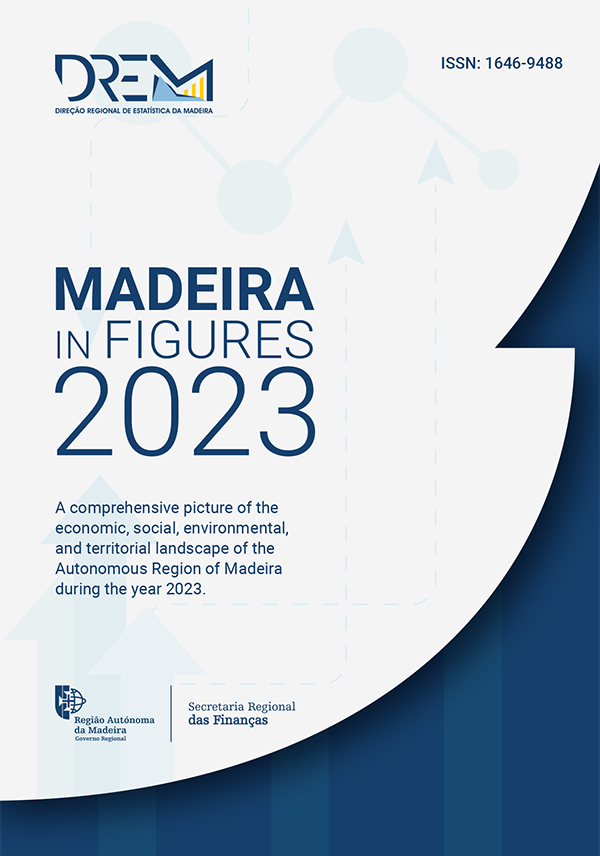
Annual publication
Price: papel - 3,50 € / PDF - Free
Year of publication: 2024
Reference period: 2023
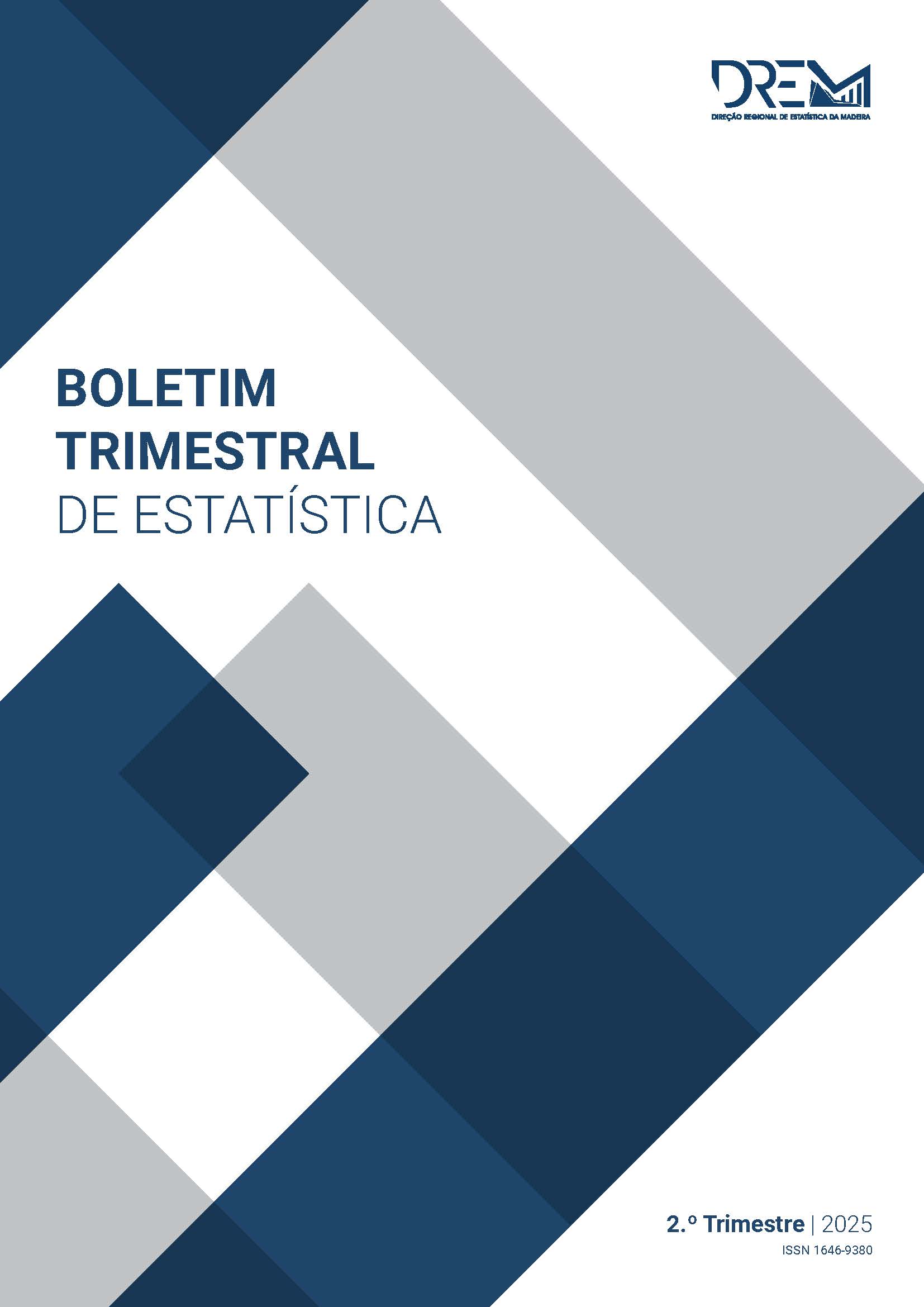
Quarterly Bulletin of Statistics
Quarterly publication
Price: paper - 4,00 € / PDF - Free
Year of publication: 2025
Reference period: 2nd Quarter 2025
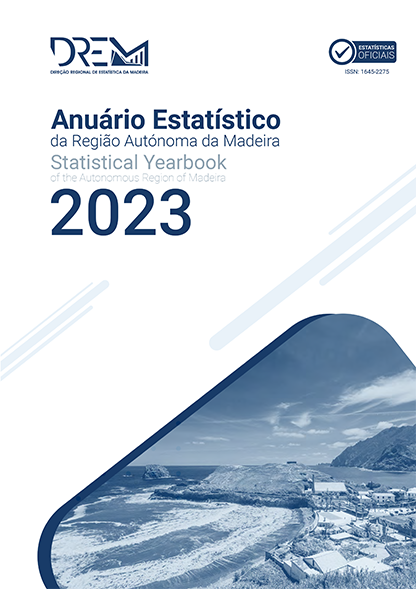
Annual publication
Price: paper - 22,00 € / PDF - Free
Year of publication: 2024
Reference period: 2023

Census - Final results: Autonomous Region of Madeira - 2021
Annual publication
Price: paper - 10,00 € / PDF - Free
Year of publication: 2023
Reference period: 2021

Annual publication
Price: PDF - Free
Year of publication: 2026
Reference period: 2025
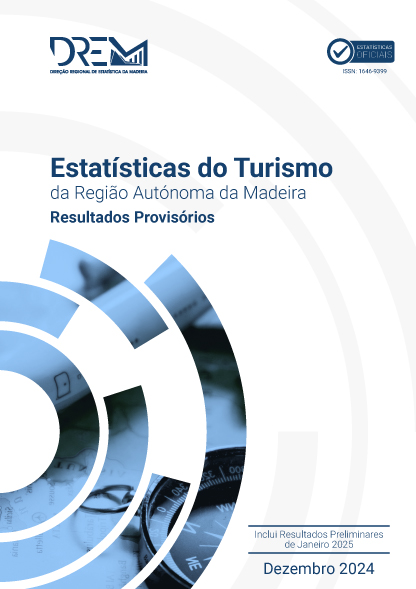
Monthly publication
Price: paper - 3,00 € / PDF - Free
Year of publication: 2025
Reference period: December 2024
Annual publication
Price: paper - 10,00 € / PDF - Free
Year of publication: 2024
Reference period: 2023

Annual publication
Price: paper- 12,00 € / PDF - Free
Year of publication: 2024
Reference period: 2022

International Trade Statistics
Annual publication
Price: paper- 6,00 € / PDF - Free
Year of publication: 2021
Reference period: 2020

Quarterly publication
Price: paper- 2,00 € / PDF - Free
Year of publication: 2025
Reference period: 4th Quarter 2024

Annual publication
Price: paper - 4,00 € / PDF - Free
Year of publication: 2024
Reference period: 2023

Agriculture and Fishery Statistics
Annual publication
Price: paper - 3,50 € / PDF - Free
Year of publication: 2024
Reference period: 2023

Annual publication
Price: paper - 12,00 € / PDF - Free
Year of publication: 2021
Reference period: 2019
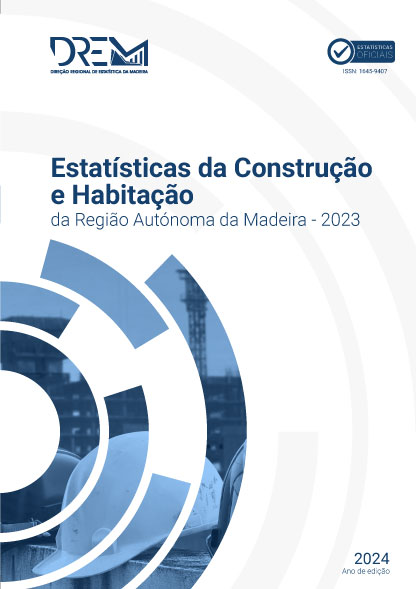
Construction and Housing Statistics
Annual publication
Price: paper - 4,50 € / PDF - Free
Year of publication: 2024
Reference period: 2023
Annual publication
Price: paper - 3,50 € / PDF - Free
Year of publication: 2024
Reference period: 2023

Annual publication
Price: paper - 22,00 € / PDF - Free
Year of publication: 2023
Reference period: 2022

Monthly publication
Price: paper - 1,50 € / PDF - Free
Year of publication: 2025
Reference period: May 2025
Annual publication
Price: paper - 10,00 € / PDF - Free
Year of publication: 2024
Reference period: 2023
International Trade Statistics
Annual publication
Price: paper - 6,00 € / PDF - Free
Year of publication: 2021
Reference period: 2020
Annual publication
Price: paper - 4,00 € / PDF - Free
Year of publication: 2024
Reference period: 2023
Annual publication
Price: paper - 12,00 € / PDF - Free
Year of publication: 2021
Reference period: 2019
Quarterly Bulletin of Statistics
Quarterly publication
Price: paper - 4,00 € / PDF - Free
Year of publication: 2025
Reference period: 2nd Quarter 2025
Census - Final results. Autonomous Region of Madeira - 2021
Annual publication
Price: paper - 10,00 € / PDF - Free
Year of publication: 2023
Reference period: 2021
Construction and Housing Statistics
Annual publication
Price: paper - 4,50 € / PDF - Free
Year of publication: 2023
Reference period: 2022
Agriculture and Fishery Statistics
Annual publication
Price: paper - 3,50 € / PDF - Free
Year of publication: 2024
Reference period: 2023
Quarterly publication
Price: paper - 2,00 € / PDF - Free
Year of publication: 2025
Reference period: 4th Quarter 2024
Annual publication
Price: paper - 12,00 € / PDF - Free
Year of publication: 2024
Reference period: 2022
Monthly publication
Price: paper - 3,00 € / PDF - Free
Year of publication: 2025
Reference period: December 2024
Between 2024 and 2100, according to the central projection scenario
Autonomous Region of Madeira is expected to lose half of its population and demographic ageing will intensify
Statistics Portugal released the Resident Population Projections 2025-2100, broken down by sex and age (year by year, up to 100 years old and over) for Portugal and for the NUTS2 regions.
The study released by Statistics Portugal “is based on assumptions about the future evolution of demographic components — fertility, mortality and migration. These assumptions were defined on the basis of the information and data sources available at Statistics Portugal at the time, namely Annual Estimates of Immigration, Annual Estimates of Emigration and Provisional Estimates of Resident Population 2024.”
The Resident Population Projections 2025-2100 exercise follows the cohort-component method, using as its baseline the estimate of the resident population as of 31 December 2024. Four projection scenarios were defined: low scenario (LS), central scenario (CS), high scenario (HS) and no migration scenario (NMS), based on different combinations of alternative assumptions regarding the evolution of demographic components — central, optimistic and pessimistic assumptions for fertility and mortality; central, optimistic and pessimistic assumptions for migration; together with a no-migration assumption, which allows the impact of migration on population evolution to be assessed.
Statistics Portugal exercise reveals that, between 2024 and 2100, according to the central projection scenario, Portugal will lose population from the current 10.7 million to 8.3 million residents, falling below the threshold of 10 million inhabitants in 2057 and 9 million in 2079.
In the Autonomous Region of Madeira, the trend in population will be similar. Under the central scenario, the population is projected to fall from 259.4 thousand persons in 2024 to 123.3 thousand in 2100. This represents a reduction of 52.5% over 75 years, corresponding to a loss of around 136.2 thousand persons.
In the period under analysis, the population of the Autonomous Region of Madeira is projected to evolve as follows, according to the low, central, high and no-migration scenarios:
It should be noted that, under the low scenario, population loss will be even more pronounced, as a result of declining fertility levels and persistently very low net migration, with the Region’s resident population potentially falling to 91.3 thousand by 2100. Conversely, under the high scenario, the decline will be less marked, mainly due to a recovery in fertility combined with higher positive net migration, although the resident population is still projected to decrease, reaching 158 thousand residents in 2100. In the no-migration scenario, which assumes the unlikely possibility of the absence of migratory flows and in which the assumptions regarding fertility and mortality follow those adopted in the central scenario, the resident population in 2100 would be expected to reach around 121.7 thousand persons.
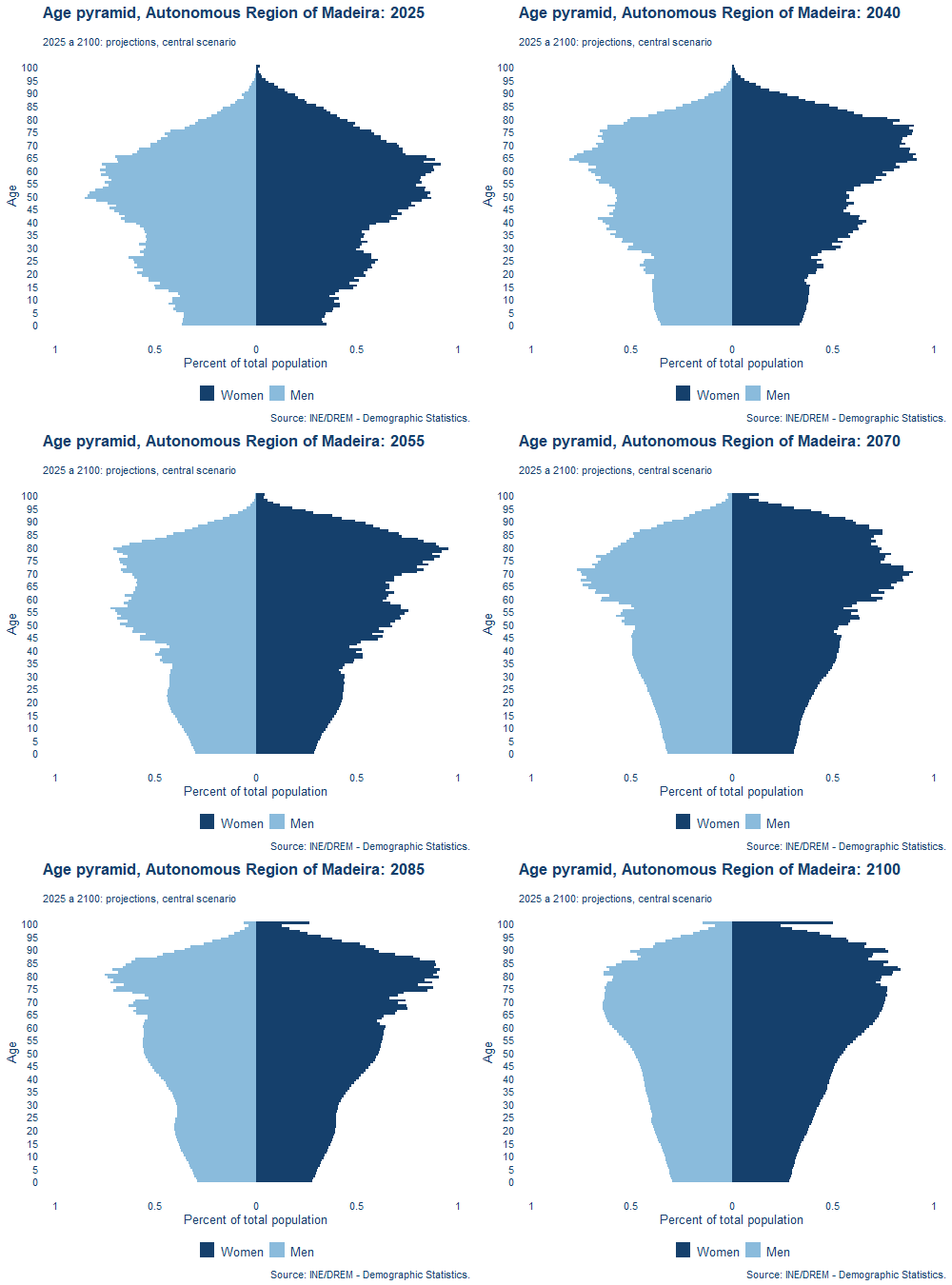
In addition to population decline, profound changes in the age structure of the Region population are expected, as the trend of demographic ageing is projected to intensify in the coming decades.
Between 2024 and 2100, in the Region, according to the central projection scenario, the number of young persons (0-14 years) will fall from 31.0 thousand to 11.8 thousand, while the number of older persons (aged 65 and over) will fall from 55.3 thousand to 52.0 thousand. In the same scenario, the working-age population (15-64 years) is projected to shrink by around 114 thousand, from 173.1 thousand in 2024 to 59.5 thousand in 2100.
Given the sharper decline in the young population compared with the older population, the results point to a significant worsening of the ageing index in the Region, which, under the central scenario, will increase from 179 in 2024 to 442 older persons per 100 young persons (more than doubling) in 2100. At national level, this index will rise from 192 to 316, reaching by 2100 a value below that of the Region.
Over the same period and scenario, the potential sustainability ratio (the ratio between the number of working-age persons and the number of persons aged 65 and over) will undergo a sharp reduction, from 313 to 114 working-age persons per 100 older persons. For Portugal as a whole, this ratio will decrease from 259 to 136 working-age persons per 100 older persons.
According to the central projection scenario, between 2024 and 2100, the total fertility rate — which measures the average number of children per woman of childbearing age (15-49 years) — is expected to rise from 1.25 to 1.36, in line with the upward trend observed nationally (from 1.40 in 2024 to 1.50 in 2100).
In the same scenario, life expectancy at birth for men is projected to increase from 75.87 years in 2024 to 86.70 years in 2100. Similarly, life expectancy at birth for women is expected to rise from 82.08 years to 92.11 years. In Portugal, life expectancy at birth for men is projected to increase from 78.73 years in 2024 to 90.38 years in 2100, while for women from 83.96 years to 94.14 years.
For more information, please click on:
 |
|
 |
|





|
|
|
|
 |
 |
|
 |
|
|
 |
Copyright © 2026 Direção Regional de Estatística da Madeira. All rights reserved.
Address: Calçada de Santa Clara 38, 9004-545 Funchal, Madeira Island
Phone: +351 291 145 126 (National landline call)


